
Your team sells on WhatsApp, answers on Instagram and gets questions through Messenger. Each channel has its own numbers, but none of them tells you how much you sold, who replied late or which campaign brought in the customers who actually bought. The result is familiar: sales meetings run on gut feeling instead of data.
Sales automation helps you reply faster and stop losing follow-ups, but without unified reporting you cannot tell whether it is working. In this guide we compare sales automation software with a focus on analytics: which metrics you should see, which criteria to use when evaluating and how each tool stacks up. If you first want to understand what sales automation is and where to start, read our guide to sales automation.
Why omnichannel sales need unified reporting
When you sell across several chat channels, your data ends up scattered. WhatsApp lives on one number (or several), Instagram in the account inbox, Messenger on your Facebook page and ads in Meta’s ads manager. Each source has its own view, and none of them connects with the others.
That creates three concrete problems:
- You can’t see the full funnel. A customer may see an Instagram ad, message you on WhatsApp and buy a few days later. If each channel is measured on its own, that sale gets credited to nothing.
- You don’t know how each agent performs. Without a shared inbox, response times and workload depend on what each rep reports.
- Decisions come too late. If the weekly report takes hours of copy and paste, problems (an overloaded channel, a swamped agent, a campaign that doesn’t convert) surface only after they have cost you sales.
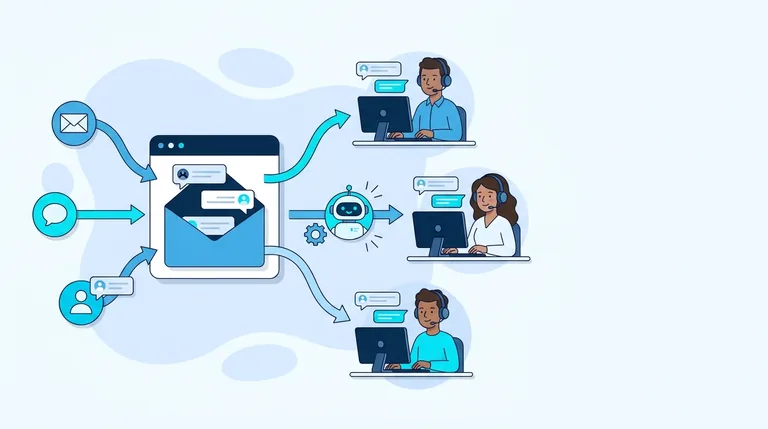
Good communication channel management software solves the operational side first (every conversation in one place) and, as a result, gives you data you can compare across channels. If several people answer the same number, see how to set up multiple users on WhatsApp.
The metrics a sales leader should see
Before comparing tools, decide what you need to measure. These are the metrics with the biggest impact on a multichannel messaging operation:
| Metric | What it tells you | Question it answers |
|---|---|---|
| First response time | How long a new customer waits for a reply | Are we losing leads because we are slow? |
| Response time per agent | How fast each team member is | Who needs support or a better workload split? |
| Conversations per channel | Where demand comes from | Which channel deserves more staff or budget? |
| Conversion by funnel stage | Where opportunities drop off | Are we failing at qualifying, quoting or collecting payment? |
| Sales by agent and channel | Which people and channels drive revenue | Where are the results, not just the activity? |
| Ad-to-close attribution (ROAS) | How much each campaign sold, measured to the close | Which ads pay for themselves? |
| Abandoned conversations | Chats left without a reply or follow-up | How many sales slip away for lack of follow-up? |
The first five are core sales analytics and should be in any serious platform. Ad-to-close attribution is the hardest to get, because it requires connecting the ads manager with the conversation and with the sale recorded in the CRM. Few tools do it natively, so ask about it in every demo. For a refresher on stages, see our guide to the sales funnel.
Criteria for evaluating sales automation software with analytics
Use these six criteria to compare options. Score each one from 1 to 5 based on how your team works.
- Unified channel inbox. Does it bring WhatsApp, Instagram, Messenger and the other channels you use into one inbox, with history per customer? Without this, your sales reports will never be comparable.
- Automation. Does it offer chatbots, automatic assignment (round robin, for example), quick replies and an AI agent that qualifies leads? Our WhatsApp chatbot guide covers the basics.
- Real-time operational visibility. Can a supervisor see each agent’s workload, unanswered chats and response times as they happen, not just at the end of the month?
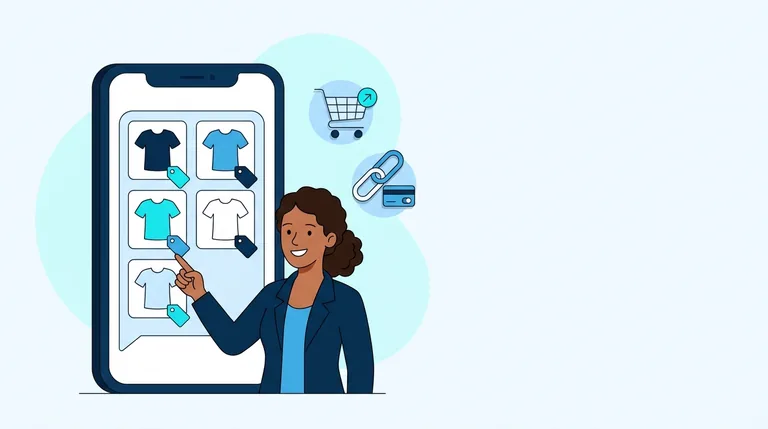
- Closing tools in the chat. Can you send quotes, share your catalog and collect payment with payment links without leaving the conversation? When the close happens outside the chat, the sale often ends up outside the report too.
- Reporting depth. Can you filter by date, channel and agent? Export the data? Is there an API or webhooks to send it to your BI tool?
- Attribution from ads. Does it connect your Meta campaigns with conversations and closes to measure the real return?
One platform for sales and support
Many teams start with a tool for sales and, a few months later, customer support sets up its own. The result: a customer who bought yesterday and asks about the order today lands in a different inbox, with no history, and nobody knows whether that complaint puts a deal in progress at risk. If you are choosing communication management software, check from day one how both teams would work in the same place:
- Shared inbox with a single history. Sales and support see the same customer conversation, with everything said before on WhatsApp, Instagram or Messenger. Nobody asks for the order number twice.
- Handoff without losing context. When a customer who already bought writes in with a problem, the rep transfers the chat to support (or the other way around, when a support question turns into a new sale) and the history travels with the conversation.
- Separate queues, teams and permissions. Each team works its own queue with its own assignment rules, and each person sees what belongs to them.
- Reports by team. Sales and support response times are not measured the same way. If the platform blends them, the average hides both teams’ problems.
In Mercately, the shared inbox brings together WhatsApp, Instagram, Messenger and TikTok. With WhatsApp Multiagent and multiple numbers you can keep one number for sales and another for support, with permissions by team and separate reports per number. MIA, the AI agent, handles common questions 24/7, qualifies leads and hands off to a person when needed.
How to tell if a multichannel platform will scale
With 3 agents almost any tool works: everyone sees everything and the supervisor checks chats by hand. With 30, that same setup becomes a bottleneck. Here is what changes:
- Routing rules. “Whoever sees the chat first replies” no longer works. You need automatic assignment, such as round robin, and rules by channel, number or team so no conversation is left without an owner.
- Supervisor view. Whoever coordinates the team needs to see agent workload, unanswered chats and response times in real time, so they can move people before a queue builds up.
- Multiple numbers by team or country. If you sell in several countries or split sales and support, each WhatsApp line should have its own team, permissions and reports.
- Automation at first contact. Chatbots and an AI agent answer repetitive questions and qualify leads, so the team receives conversations that are ready to move forward. Without that, each new agent just absorbs more of the same volume.
- Reports by team and by number. The global number stops being useful. You need to compare teams, numbers and agents against each other.
- API and webhooks. At a certain size, conversation and sales data has to reach your BI tool without manual exports.
To see how this flow is set up step by step in Mercately, read our guide to multichannel sales automation.
Signs your platform no longer scales
| Sign | What is usually missing |
|---|---|
| Chats are assigned by hand or to whoever gets there first | Automatic assignment and rules by team |
| The supervisor learns about the queue when a customer complains | Real-time view of workload and unanswered chats |
| Sales and support share one number and step on each other | Multiple numbers with permissions by team |
| Every new agent answers the same basic questions | Chatbots or an AI agent at first contact |
| The monthly report blends every team and number | Separate reports by team and by number |
| Someone exports spreadsheets every week for BI | REST API and webhooks |
Omnichannel sales software compared
These are multichannel sales platforms that teams selling through chat in Latin America commonly evaluate. We describe each by its main focus. Features and pricing change often, so check what your plan includes for each one.
1. Mercately
Mercately is an AI-powered conversational CRM for WhatsApp, Instagram and Facebook Messenger (plus TikTok), built for Latin American businesses and an official Meta partner. Its approach is that the whole sale happens, and gets measured, inside the chat.
- Omnichannel shared inbox with WhatsApp Multiagent, multiple numbers and round robin assignment.
- Automation: no-code chatbots and the AI agent MIA, which handles conversations 24/7, qualifies leads and hands off to a person when needed.
- Statistics on response times, workload per agent and sales.
- Closing in the chat: PDF quotes and payment links with Stripe, Nequi, Daviplata, Bre-B or Payphone.
- Attribution with Performance Hub: an add-on that links Meta Ads with conversations and CRM closes to measure the ROAS of each campaign.
- Campaigns with approved templates, Shopify and WooCommerce integrations, a REST API and webhooks.
Best for: SMBs and sales teams in Latin America that sell through chat and want to measure from the ad to the payment. Free 15-day trial, no credit card required. See plans.
2. HubSpot
HubSpot is a marketing, sales and service suite with very complete reporting on top of its CRM. WhatsApp and social channels plug in as channels within its ecosystem.
Best for: companies that already use HubSpot for marketing and want everything in one suite. Keep in mind: it isn’t built specifically for selling through chat; check which messaging channels and reports your plan includes.
3. Kommo
Kommo is a sales CRM built around messaging, with visual pipelines where each conversation moves forward as an opportunity.
Best for: sales teams that work in pipelines and want stage-based automation. Keep in mind: check the scope of reporting in your plan and which features require add-ons.
4. Zoho CRM
Zoho CRM is part of a modular ecosystem of business apps and can be configured around your own sales process.
Best for: companies that want a tailored CRM connected to other Zoho apps. Keep in mind: setting up messaging channels and reports can take time or technical help.
5. respond.io
respond.io is an omnichannel conversation management platform with automations and workflows for mid-sized and large teams.
Best for: operations with high conversation volume across several channels. Keep in mind: advanced workflows have a learning curve; check your plan for payment tools and the level of detail in sales reports.
6. Leadsales
Leadsales is a CRM for teams that sell on WhatsApp, Instagram and Messenger, with pipelines where each chat moves through stages.
Best for: Latin American SMBs looking for a pipeline CRM built for messaging. Keep in mind: compare which automations and reports each plan includes and whether it supports payments inside the chat.
7. Salesforce
Salesforce is an enterprise CRM with very broad reporting capabilities and a large integration ecosystem.
Best for: large companies with technical teams or an implementation partner. Keep in mind: implementation and total cost are designed for large operations, and connecting chat channels usually requires additional setup.
8. Clientify
Clientify is an all-in-one marketing and sales platform with a CRM, automation and built-in WhatsApp.
Best for: companies that want email, landing pages and a CRM together with WhatsApp. Keep in mind: check how deep multi-agent support and per-channel reporting go if most of your operation runs through chat.
Comparison table
| Platform | Chat channels | Unified reporting | Automation | Closing in chat | Best for | Sales + support and scale |
|---|---|---|---|---|---|---|
| Mercately | WhatsApp, Instagram, Messenger, TikTok | Response times, agent workload, sales; ROAS with Performance Hub | Chatbots, MIA (AI), round robin | PDF quotes and payment links | LATAM SMBs selling through chat | Shared inbox, multiple numbers with permissions and per-number reports, API and webhooks |
| HubSpot | WhatsApp and others, check your plan | Broad CRM reporting | Marketing and sales workflows | Check your plan | Companies in the HubSpot ecosystem | Confirm in their plan |
| Kommo | Messaging, check your plan | Pipeline reports | Stage-based automation | Check your plan | Teams selling through pipelines | Confirm in their plan |
| Zoho CRM | Depends on setup | Configurable reports | Rules and workflows | Check your plan | Companies wanting a tailored CRM | Confirm in their plan |
| respond.io | Several messaging channels | Conversation reports | Advanced workflows | Check your plan | High-volume omnichannel teams | Confirm in their plan |
| Leadsales | WhatsApp, Instagram, Messenger | Check your plan | Pipeline automation | Check your plan | LATAM SMBs with chat pipelines | Confirm in their plan |
| Salesforce | Depends on setup | Enterprise reporting | Extensive, with setup | Check your plan | Large enterprises | Confirm in their plan |
| Clientify | WhatsApp and others, check your plan | Marketing and sales reports | Marketing and sales | Check your plan | Marketing and sales in one suite | Confirm in their plan |
For a comparison focused only on WhatsApp, see our WhatsApp CRM guide. Selling on TikTok too? Read about the TikTok CRM.
How to build your weekly sales report
Data is useless if nobody looks at it. Here is a simple format you can put together in 30 minutes every Monday:
- Volume: new conversations per channel compared with the previous week. If one channel jumps, check whether you have enough people on it.
- Speed: first response time for the team and for each agent. Flag anyone above your target.
- Funnel: how many conversations moved from lead to quote and from quote to sale. Find the stage with the biggest drop.
- Results: sales by agent and by channel, in count and in revenue.
- Leaks: abandoned conversations or chats without follow-up. Decide which automation or assignment rule would prevent them.
- Spend: return on each ad campaign measured to the close. Pause what doesn’t sell and scale what does.
- One action: end the report with a single decision for the week. A report without an action is just another file.
If messaging costs are part of your analysis, remember that Meta charges per delivered message based on category and the customer’s country, with changes since October 1, 2026. Replies inside the customer service window also have a cost, so include them when you calculate profitability by channel.
Conclusion
The best omnichannel sales software isn’t the one with the most charts. It’s the one that unifies your chat channels, automates repetitive work, lets you close the sale inside the conversation and shows you, with data, which agent, channel and campaign drive revenue. If you sell through WhatsApp, Instagram and Messenger in Latin America, Mercately brings those pieces together on one platform, and with Performance Hub you can measure the ROAS of your ads all the way to the close.
Book a demo to see what your weekly report could look like, or try Mercately free for 15 days, no credit card required.